
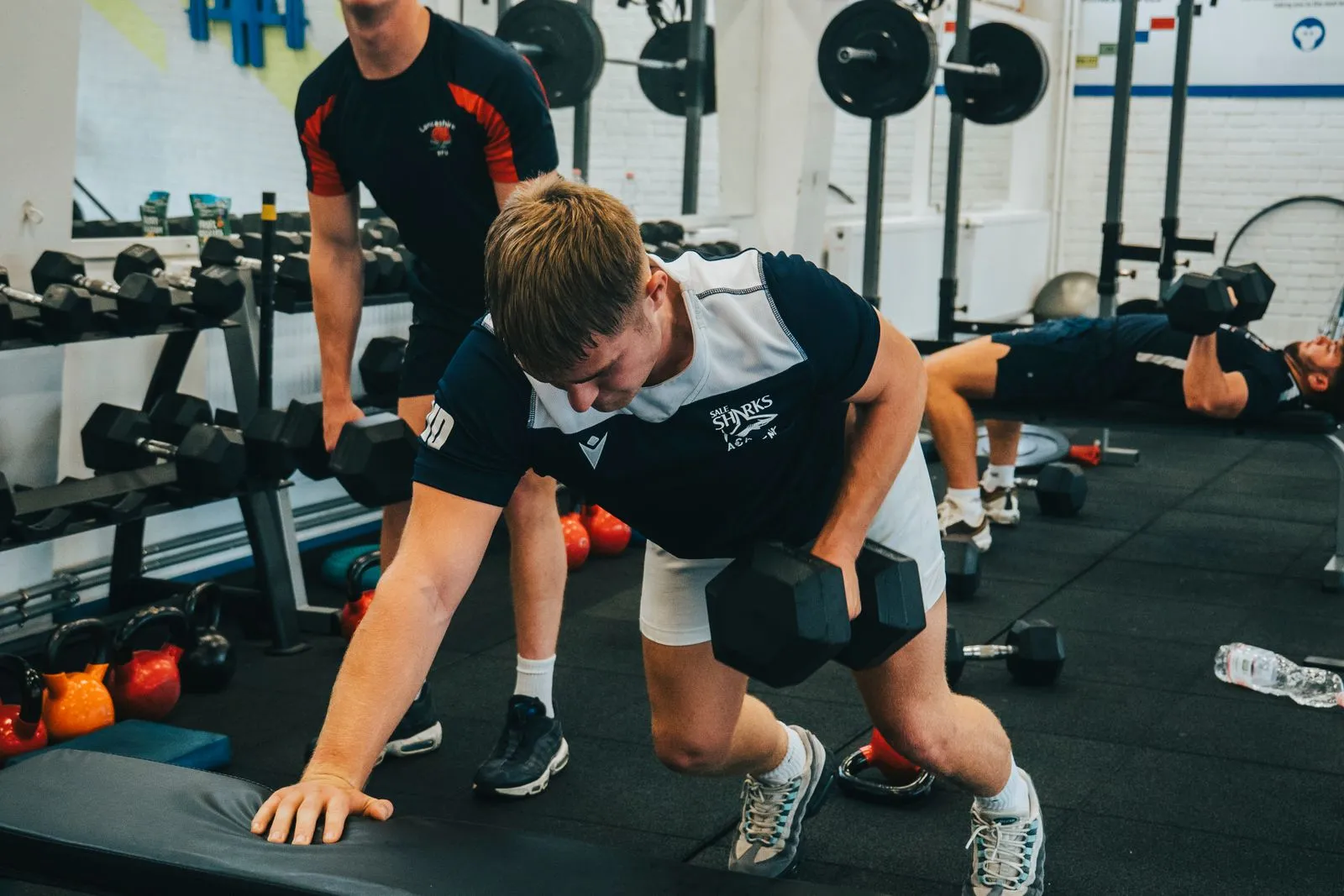
The right training weight is not the heaviest one you can lift. It is a load you can move through the planned exercise with control while still making the last few repetitions feel challenging. That choice may change from one exercise or day to another. Use a simple test set, watch your form, and adjust before fatigue turns a useful workout into a sloppy one. These practical cues can help you start at a manageable level and build steadily.
Start With a Test Set
Choose a weight you expect to handle comfortably, then perform a few controlled repetitions. Pay attention to how the weight feels as you lower it as well as lift it. If you are unsure where to begin, start lighter than you think you need; you can add weight after checking your movement.
For a working set, aim to finish with good form and the sense that you could complete a few more repetitions, but not a whole extra set. If every rep feels effortless, the load may be too light. If you struggle early, shorten your range of motion, or need to swing the weight, reduce it.
Let Form Set the Limit
Move at a steady pace and keep the positions the exercise calls for. For example, avoid arching your back to press overhead or bouncing through a squat to get back up. Stop the set if you cannot control the weight, your posture changes, or you feel sharp pain. Muscle effort is expected; pain is a reason to pause.
Use a load that lets you breathe rather than hold your breath through every repetition. Keep the movement smooth, and leave enough room to complete the planned range of motion. If your form breaks down near the end, end the set there instead of forcing extra reps. A lighter weight with consistent technique is a better base for progress.
Adjust for Each Exercise
Different movements call for different weights. You may use more resistance for a stable exercise such as a leg press than for a small, controlled movement such as a lateral raise. Choose separately for each exercise instead of assuming one pair of dumbbells will suit your whole workout.
Your energy and experience can also affect the right choice. After a break, a poor night's sleep, or a demanding workout, use a lighter load if needed. Make a note of the weight and repetitions you complete with good form. That record gives you a useful starting point next time without locking you into the same load every day.
Progress One Step at a Time
When you can complete all planned sets and repetitions with controlled movement, and the final reps still look like the first, consider a small increase next time. Add the smallest practical amount available, then check your form again. If the new load makes the movement unstable or cuts your range short, return to the previous weight.
You can also progress by adding a repetition or improving control before increasing resistance. Change one thing at a time so you can tell how your body responds. Rest between sets, allow recovery between hard sessions, and ask a qualified trainer to check technique if an exercise feels uncertain. Steady progress matters more than rushing to lift heavier.
Choose a weight that challenges you without changing your technique. Start with a test set, adjust to keep your movement controlled, and increase resistance only when your planned reps feel solid. If you want guidance choosing loads and practicing form, Badger Fit can help you explore small-group training in Madison.